Telnet
Telnet is a simple and lightweight network protocol and command-line tool that allows you to establish a text-based connection to a remote host over a TCP/IP network. It operates by opening a raw terminal session on a specified remote host and port, allowing you to send commands and receive responses directly from the remote system's command-line interface.
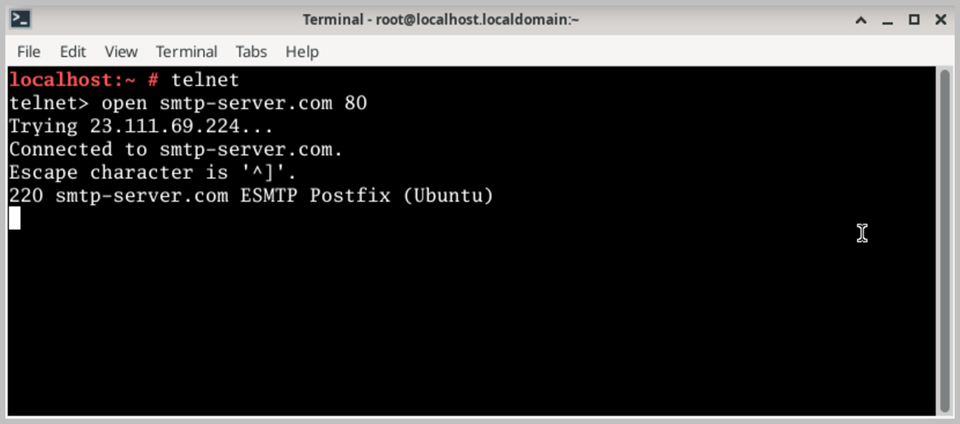
Telnet is primarily used for testing and diagnosing network services and open ports on remote hosts. By connecting to a specific TCP port, you can verify whether a service is running and responding correctly, inspect raw server responses, and troubleshoot network connectivity issues. Common use cases include testing web server responses on port 80, verifying mail server connectivity on port 25, and checking the availability of other network services.
It is important to note that Telnet transmits all data, including login credentials and commands, in plain unencrypted text. For this reason, it is not recommended for use in production environments or over unsecured networks where data security is a concern. For secure remote access, it is strongly recommended to use SSH instead, which provides the same command-line functionality with full encryption. Within the Active@ LiveCD environment, Telnet is best suited for network diagnostics, port testing, and communication with legacy systems that do not support modern encrypted protocols.